How to Unblock a Kitchen Sink Drain at Home?

Table of Contents
- Check Why Your Kitchen Sink Is Blocked Before You Start
- How to Unblock a Sink with a Plunger
- How to Unblock a Kitchen Sink with Bicarbonate of Soda and Vinegar
- Using Hot Water and Drain Unblockers Safely
- How to Clean a Kitchen Sink Trap
- When to Call a Plumber for a Blocked Sink
- Keeping Your Kitchen Sink Drain Clear Between Blockages
- Frequently Asked Questions
Check Why Your Kitchen Sink Is Blocked Before You Start
Check how the water behaves. If the sink drains slowly but water still gets through, the blockage is usually partial and near the top of the waste.
Common causes include:
- Fat and grease that solidify as they cool and coat the pipe walls
- Food scraps such as rice, pasta, coffee grounds and eggshells
- Soap residue that builds up slowly over months
A slow sink is often the first warning of a deeper problem.
Watch out: Never pour boiling water into a sink full of standing water. Let the water drain first, or the sudden heat can crack older plastic waste pipes.
How to Unblock a Sink with a Plunger
A plunger is the safest first step for most kitchen sink blockages and costs very little.
- Remove any strainer or plug from the sink.
- Fill the sink with enough water to cover the plunger cup.
- If there is a second basin, block its outlet with a damp cloth so the pressure works on the right side.
- Place the plunger over the plughole and press down firmly.
- Pump up and down sharply about 15 to 20 times, then lift the plunger off quickly.
Repeat two or three times and check whether the water drains. If it does, run the hot tap for a minute to clear any remaining residue.
A common mistake is plunging a dry sink.
The table below sets out the main kitchen sink blockage methods, what each is best for and the key difference between them.
| Method | Best for | Key difference |
|---|---|---|
| Plunger | Soft blockages near the top of the waste | No chemicals; needs water in the sink |
| Bicarbonate of soda and vinegar | Grease and soap residue | Gentle fizzing reaction; not for solid blockages |
| Hot water flush | Soft grease and soap residue | Clears loosened residue; not food debris |
| Chemical unblocker | Grease, hair and soap | Single full application only; never mix with other products |
| Trap cleaning | Debris caught in the U-bend | Physically removes debris the other methods cannot reach |
How to Unblock a Kitchen Sink with Bicarbonate of Soda and Vinegar
Bicarbonate of soda and white vinegar is a gentle option for slow drains caused by grease and soap residue.
- Pour about half a cup of bicarbonate of soda down the plughole.
- Follow with about half a cup of white vinegar. Expect fizzing.
- Cover the plughole with a stopper or a damp cloth so the reaction stays in the pipe.
- Leave it for 15 to 30 minutes.
- Flush with a kettle of hot water, not boiling, then run the cold tap to clear the rest.
If the sink still drains slowly, the blockage is probably too far down for this method. Move on to checking the trap.
Watch out: Do not mix bicarbonate of soda or vinegar with a chemical drain unblocker. Mixing products can release harmful fumes or cause a dangerous reaction.
Using Hot Water and Drain Unblockers Safely
Hot water and chemical unblockers sit at opposite ends of the risk scale, and the order you use them in matters as much as the products themselves. Get the sequence wrong and you can damage pipework, create harmful fumes or waste money on a product that cannot reach the blockage.
Hot water: what it can and cannot do
Hot water shifts soft grease and soap residue that has coated the pipe walls. It will not clear food debris, solidified fat or a physical obstruction such as a plug of rice or a build-up of coffee grounds.
Use water from the kettle that is hot but not boiling, and pour it slowly down the plughole in stages. Repeat once or twice if the water starts to drain more freely.
Chemical drain unblockers: realistic expectations
Chemical unblockers fall into two groups: caustic-based products that generate heat and dissolve organic matter such as grease, hair and soap, and enzyme-based products that break down organic material more slowly. Neither will clear a solid obstruction, a collapsed pipe or a blockage caused by non-flushable items.
Read the label before you buy, follow the dose and dwell time exactly, and keep the product away from children and pets. Never use a chemical unblocker on a sink already full of standing water, because the product will be diluted before it reaches the blockage.
Safe sequencing: the order that avoids trouble
The safest order is generally mechanical first, chemical last:
- Plunger, no chemicals involved, low risk, effective on soft blockages near the top of the waste.
- Bicarbonate of soda and vinegar, gentle, safe on most pipework, useful for grease and soap residue.
- Hot water flush, clears loosened residue after the first two steps.
- Trap removal and cleaning, physically removes debris the earlier steps cannot reach.
- Chemical unblocker, only after mechanical methods have failed, and only as a single full application.
- Drain snake or professional help, if the blockage is deeper than the trap.
Chemical compatibility: what never to mix
Never combine a chemical drain unblocker with bicarbonate of soda, vinegar or any other household cleaner. Caustic products react violently with acids, and mixing products can release harmful fumes, generate excessive heat or damage the pipe seals.
Watch out: If you have used a chemical unblocker and the sink still will not drain, do not add a second product. Flush with plenty of cold water, ventilate the room and move on to mechanical methods or call a plumber.
When to stop using chemicals
Stop using any chemical product if:
- The sink does not start draining after one full application
- The water smells strongly or feels warm to the touch
- You notice a gurgling sound or water rising in another fitting
At this point, stop and move on to the next step. Continuing to add chemicals can damage pipes and put you at risk. A single application that has not worked tells you the blockage is either too deep or not the kind of material the product can dissolve.
How to Clean a Kitchen Sink Trap
The trap is the U-shaped section of pipe under the sink.
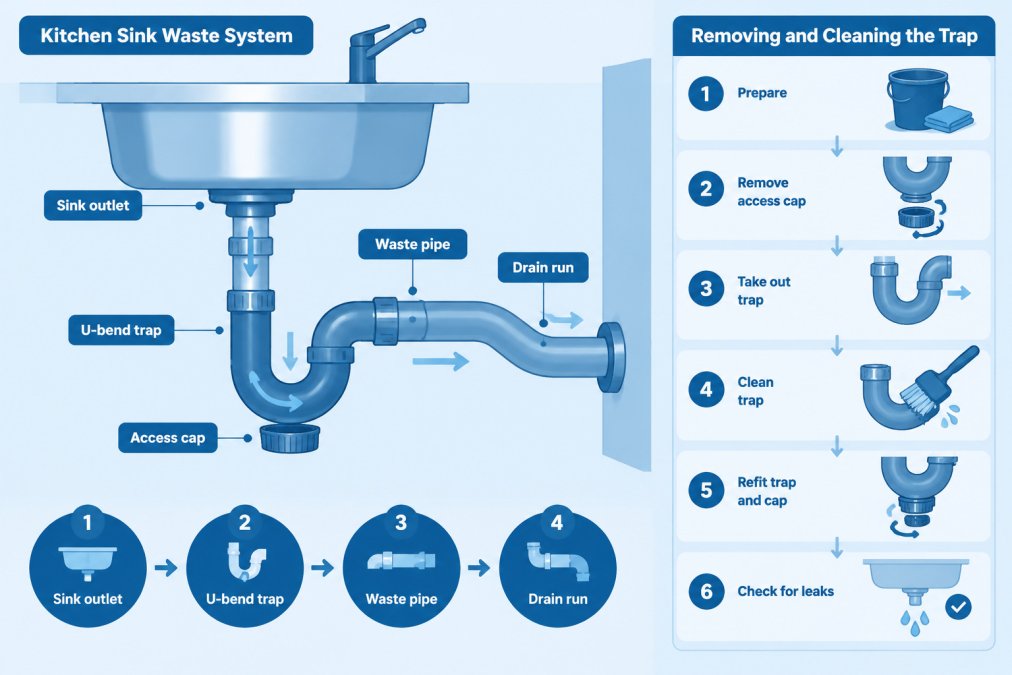
Before you start, place a bucket under the trap and put on rubber gloves.
- Loosen the slip nuts on each side of the U-bend by turning them anticlockwise by hand.
- Carefully remove the trap and empty its contents into the bucket.
- Clean the inside of the trap with a bottle brush and warm soapy water.
- Check the pipe connections for cracks or corrosion.
- Refit the trap, hand-tighten the nuts, and run the tap to check for leaks.
!Labelled diagram of a kitchen sink waste system showing the sink outlet, U-bend trap with access cap, and waste pipe
The access cap on some traps lets you clear a blockage without removing the whole U-bend.
When to Call a Plumber for a Blocked Sink
Some blockages need professional help, and knowing when to stop is as important as knowing which method to try. The decision comes down to where the blockage sits, how the sink is configured and whether the problem is recurring.
Diagnose before you escalate
A short decision tree helps you work out whether you are dealing with a local sink blockage or a wider drainage problem:
- Only one sink is affected, and the water drains slowly rather than not at all, the blockage is most likely local, in the trap or the waste pipe immediately below the sink. Mechanical methods and trap cleaning should clear it.
- One sink is fully blocked but other fittings drain normally, the blockage is still local to that sink's waste run. A drain snake or trap removal is the next step.
- Water backs up into other fittings, such as the bath, shower or toilet, when you run the kitchen tap, the blockage is in a shared waste pipe or the main drain line. DIY methods on the sink alone will not fix this, and you should call a plumber.
Configuration matters
The type of sink and waste system changes where a blockage is likely to form and which methods are safe:
- Double-bowl sinks share a single trap or waste run, so a blockage on one side can affect both. When plunging, block the second outlet with a damp cloth so pressure reaches the blockage.
- Waste disposal units can jam or become coated with grease and fibrous food waste. Never put your hand into a disposal unit, and never use a chemical unblocker in a unit that is not running freely, as the product can sit in the housing and damage seals.
- Plug mechanisms such as pop-up wastes can trap hair and food debris around the plug body. Remove the plug and clean the mechanism before assuming the blockage is deeper in the pipe.
Clear stop conditions
Stop DIY work and call a plumber if:
- The sink stays blocked after you have tried the methods above
- Water backs up into other fittings, such as the bath or toilet
- You notice bad smells, gurgling or damp patches around the sink base or floor
If you need professional blocked-drain clearance, get the right response, fast. Drainamic offers blocked drain diagnosis, clearance and high-pressure water jetting across London and surrounding areas.
A drain blockage plumber guide explains what to do before you call and what a plumber will usually do on site.
Clearing a blockage without finding the cause can mean the problem returns. A CCTV survey can show where the fault is.
Keeping Your Kitchen Sink Drain Clear Between Blockages
Good habits can help prevent many kitchen sink blockages. Try these:
- Scrape plates into the bin before washing up
- Use a sink strainer to catch food scraps
- Pour cooled fat and oil into a container and throw it away
Keep an eye on water levels when you drain sinks or toilets. A slow drain is an early warning sign, and acting on it early saves money.
For more practical advice on looking after your drains, read the drainage advice from the experts at Drainamic.
Frequently Asked Questions
How do you unblock a kitchen sink drain quickly?
Start by removing any visible debris from the plug hole and checking whether the sink is blocked at the outlet or further down. Then work through the methods in order: a plunger with a seal over the overflow, then a bicarbonate of soda and white vinegar treatment left for around 30 minutes before flushing with hot water. Avoid mixing chemical drain unblockers with vinegar or other products, and never use more than one chemical product at a time. If the water still drains slowly after these steps, the blockage is likely further along the pipework or in the trap, and cleaning the U-bend is the next step.
Can bicarbonate of soda and vinegar unblock a kitchen sink?
Bicarbonate of soda and white vinegar can clear minor blockages caused by soap residue, grease and light food debris, particularly when the water is only draining slowly. Pour around half a mug of bicarbonate of soda into the plug hole, follow with the same amount of vinegar, cover the hole and leave it for around 30 minutes before flushing with hot water. It is unlikely to clear a solid blockage such as a dense mass of food waste, so use a plunger or clean the trap if the sink does not clear.
Is it safe to use boiling water and chemical drain unblockers in a kitchen sink?
Boiling water can help melt small amounts of grease, but it should not be poured into a sink with plastic waste pipes or with a blockage that is already holding standing water, as heat can soften plastic joints and the water may not clear the blockage. Chemical drain unblockers should be used only as the product label directs, with rubber gloves and eye protection, and never after another chemical product or vinegar has been used, because the mixture can release hazardous fumes. If you are unsure, stop and seek professional help.
When should you call a plumber for a blocked kitchen sink?
Call a plumber if the sink still will not drain after using a plunger, cleaning the trap and trying a suitable drain treatment, if water is backing up into other fittings, or if you notice a foul smell, gurgling or damp patches that suggest a deeper blockage. Other warning signs include more than one drain in the property blocking at the same time, or repeated blockages within a short period. A professional can inspect the drain with a camera and confirm where the problem is before any work starts, which avoids paying for repeated quick fixes.
