
7 Steps to Unblock an Outside Drain Safely
Last Updated: November 24, 2026
Quick Summary
To unblock an outside drain, first lift the cover and remove standing water with a bucket, then scoop out leaves, mud and silt by hand in gloves and flush with a hose at full pressure. If water still sits, use a rubber plunger over the gully outlet, then drain rods turned clockwise without forcing.
- Water draining slowly at several fixtures means the blockage sits beyond the gully, so rodding the gully will not help.
- Never mix caustic soda with any other cleaner, as the reaction can spray back and burn skin.
- Use a rubber plunger head on drain rods first, then a spiral head for roots.
- Stop DIY and call a professional when waste backs up into the property or the same drain blocks twice in a season.
- A CCTV survey costs £330 and provides an MSCC5-coded full report.
Table of Contents
- How to Tell If Your Outside Drain Is Blocked
- What You Need Before You Start
- How to Clear a Blocked Drain Gully and Shift the Blockage
- How to Use Drain Rods Without Damaging the Pipework
- Blocked Drain: Who to Call and When to Stop DIY
- Outside Drain Blockage Costs: DIY Tools vs Professional Help
- Frequently Asked Questions
How to Tell If Your Outside Drain Is Blocked
Standing water in a gully, slow drainage across several fixtures, or a drain that keeps backing up are the usual signs that an outside drain is blocked. Most people reach for a plunger before they have worked out what is actually wrong.
Learning how to unblock an outside drain starts with reading the symptoms, not grabbing a tool. A blockage in the gully is a different job from a blockage deeper in the pipework.
Symptoms That Point to a Blockage
- Standing water in the gully: debris has likely built up at the drain entrance
- Slow drainage at several fixtures: the blockage is probably further along a shared run
- A bad smell with no standing water: check the trap and the ventilation
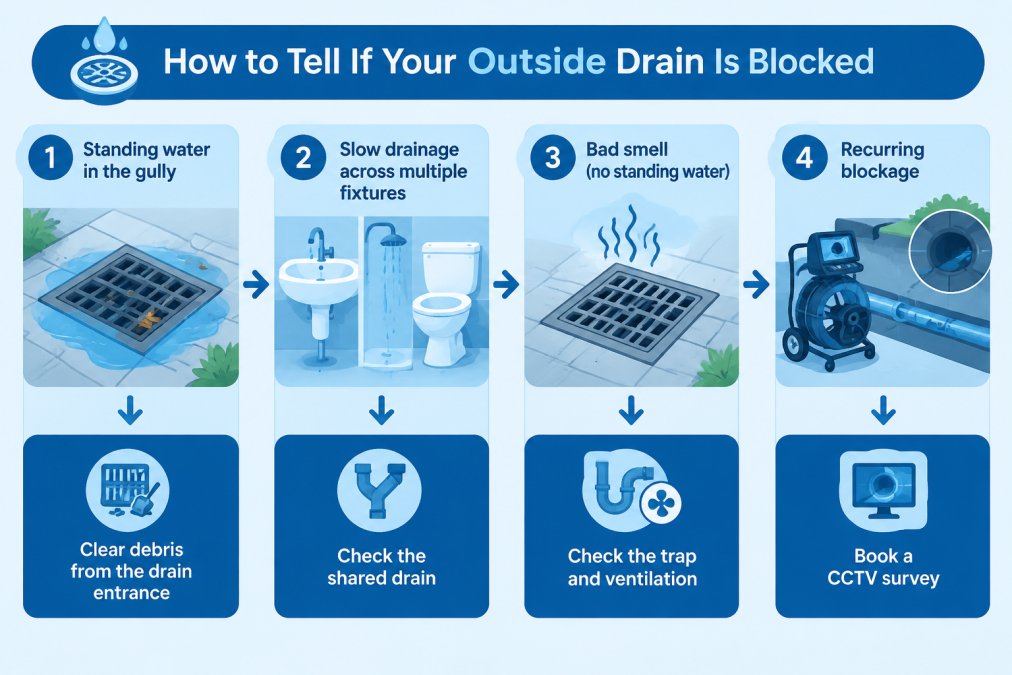
One symptom matters more than the rest. If water drains slowly in more than one part of the property, the problem sits beyond the gully, and rodding the wrong section will not fix it.
A Symptom-Led Decision Sequence
Use the pattern of symptoms to choose the right first move. This is a sensible sequence to follow.
- Water sits in one gully only, and drains away slowly after rain. The blockage is almost certainly at the drain entrance. Clear leaves, silt and mud first, then flush with a hose. Most of these clear without rods.
- Water sits in one gully and does not move at all. The gully outlet or the short run to the main drain is blocked. Remove standing water with a bucket, scoop out debris, then use a plunger over the outlet. If that fails, move to drain rods.
- Several fixtures drain slowly at the same time. The blockage is in a shared run beyond the gully. Rodding the gully will not help. This is the point to check whether the drain is private or shared before doing anything else.
- A bad smell with no standing water. The trap may have lost its water seal, or the ventilation is faulty. Run a tap to refill the trap and check for a draught. If the smell persists, the problem is likely in the pipework or the vent, not a blockage.
- The same drain blocks twice in a season. Repeated blockages point to a structural problem, a root intrusion or a partial collapse. Stop clearing and book a CCTV survey.
Private Drain or Shared Sewer: Who Is Responsible
Before you lift a cover, establish what you own.
A common pattern is that householders clear a gully repeatedly without realising the blockage sits in a shared section they do not own.
If you are unsure, check your water company's website for guidance on drain and sewer responsibility.
For more practical guides on reading drainage problems, see our drainage advice and maintenance guides.
What You Need Before You Start
Gather your kit before you lift a drain cover. The right preparation turns a messy job into a manageable one.
Safety kit:
- Rubber gloves and eye protection
- A face mask if the drain smells strongly
- Old clothes and boots you do not mind ruining
Tools:
- A drain cover key or a sturdy flat screwdriver
- A rubber plunger
- A garden hose with a good water pressure supply
Household treatments:
- Soda crystals or bicarbonate of soda and vinegar
- A bucket for removing standing water
Watch out: never mix caustic soda with any other cleaner. The reaction can spray back and burn skin.
How to Clear a Blocked Drain Gully and Shift the Blockage
Here is a step-by-step sequence to follow.
- Lift the drain cover and set it aside safely.
- Remove standing water with a bucket so you can see the bottom of the gully.
- Scoop out leaves, mud and silt by hand in gloves. This alone clears a surprising number of gullies.
- Flush with a hose at full pressure to test the flow.
- Use a rubber plunger over the gully outlet, sealing it well, and push through in short, firm strokes.
- Pour hot water, not boiling, to shift grease and soap residue.
- Try bicarbonate of soda and vinegar for a gentle fizz that lifts light deposits.
If water still sits after step seven, the blockage is deeper than the gully and you need rods.
Household Treatments: What Works and What to Avoid
Soda crystals and hot water work well on grease and soap. Bicarbonate of soda and vinegar are gentle and safe for most pipework. Caustic soda is stronger but aggressive: it can damage older pipes and is dangerous around standing water. Never pour a drain cleaner into a drain that is fully blocked, because it will sit there and splash back.
How to Use Drain Rods Without Damaging the Pipework
Drain rods clear blockages further along the run, but they are the tool most likely to cause damage. Push too hard and you can crack a joint or scrape the pipe lining.
- Screw the rods together firmly before feeding them in
- Use a rubber plunger head first, then a spiral head for roots
- Turn clockwise as you push, never force against resistance
If a rod hits something solid and will not pass, stop. At that point the sensible move is an evidence-led repair, which is exactly what our drain repair and pipe replacement service is built around.
Blocked Drain: Who to Call and When to Stop DIY
Stop DIY when water will not shift after rodding, when waste is backing up into the property, or when the same drain blocks twice in a season. Those are the signals to call a professional.
So who do you call? A drainage specialist is the right choice for a blockage that keeps returning, because the job is diagnosis, not just clearance. A water company handles public sewers.
If you want fast professional clearance, Drainamic's blocked drain response service can be discussed when you get in touch. If you would rather understand what a plumber will do before anyone arrives, read our guide to what to do before you call a drain blockage plumber.
Outside Drain Blockage Costs: DIY Tools vs Professional Help
DIY is cheap up front.
Professional help costs more, but it buys a diagnosis as well as a clearance.
Here is how the two routes compare.
| Route | Typical Outlay | What You Get | Best For |
|---|---|---|---|
| DIY tools | Low one-off cost | Clearance only, no diagnosis | Fresh gully blockages |
| Household treatments | Very low | Light grease and soap deposits | Maintenance between clears |
| Professional clearance | Agreed price before work | Clearance plus cause identified | Repeat or deep blockages |
| CCTV survey | £330 | MSCC5-coded full report | Buying, letting or renovating |
Skipping a survey to save money can be a false economy when a leaking drain is quietly weakening the structure.
Before you book anyone, check the engineer is qualified to produce CCTV survey reports. An unqualified engineer may miss an urgent problem, and you pay for it later.
Prevention and Maintenance: Stop the Blockage Returning
Most outside drain blockages are caused by debris that could have been kept out.
- Fit a gully grid or leaf guard. A removable mesh cover over the gully catches leaves, moss and silt before they enter the drain. Empty it after heavy rain and in autumn.
- Keep grease and cooking oil out of the drain. Pour cooled fat into a container and bin it. Grease coats the pipe and narrows the bore, which is a common cause of slow drainage further along the run.
- Do not flush wipes, cotton buds or sanitary products. Even products labelled flushable can catch on rough joints and build into a blockage. Bin them instead.
Watch out: do not pour caustic soda or strong chemicals into a drain as a routine maintenance measure.
A small amount of prevention is cheaper than any clearance.
A blocked outside drain is rarely just a blockage. It is usually a symptom of something the pipework is trying to tell you.
Frequently Asked Questions
Can you unblock an outside drain yourself?
Yes, for simple blockages caused by leaves, mud or silt at the gully. Lift the drain cover, remove the debris with gloves, then flush with water from a hose. If water still backs up after that, the blockage is deeper in the pipework and needs drain rods or a professional. Never pour caustic soda into an outside drain that may connect to a shared sewer without checking, because it can damage pipework and harm the environment.
Who is responsible for a blocked outside drain?
In most cases, the property owner is responsible for drains within their boundary, including gullies and the pipework serving their home. Drains shared with neighbours or connected to the public sewer are usually the water company's responsibility to maintain. If you are unsure which type you have, check your property deeds or ask your water company before paying for work you may not need to fund.
How much does it cost to clear a blocked outside drain?
Outside drain blockage costs vary with the cause and access. A simple clearance is usually cheaper than a CCTV survey and repair. For current survey prices, see the Drainamic website. Skipping diagnosis to save that fee can lead to tens of thousands of pounds in damage if a leaking drain goes unnoticed. Ask for a confirmed price before any work starts so there are no surprise charges.
When should you call a drainage professional for a blocked outside drain?
Call a professional if water still backs up after you have cleared the gully and tried drain rods, if the blockage keeps returning, or if you notice a bad smell or damp patches near the drain. Recurring blockages often point to a structural fault that clearing alone will not fix. A qualified engineer can run a CCTV survey and give you a written report explaining the cause in plain English.
