
How to Unblock a Shower Drain: Causes and Fixes

Last Updated: November 19, 2026
Quick Summary
A blocked shower drain is usually caused by a layered build-up of hair, soap residue, skin oils and debris that accumulates over months in the trap. Clearing the surface often fails, so the blockage lower down must be removed by hand or, if that fails, by a professional.
- Hair is the main binding agent that catches soap scum and other debris.
- Remove visible hair from the strainer with gloves or a bent wire hook.
- Never mix chemical drain openers with other cleaners or a recently used plunger.
- Water that stands for minutes suggests a deep blockage or pipe fault.
- Call a plumber if DIY clearing fails, water backs up, or you smell sewage.
Table of Contents
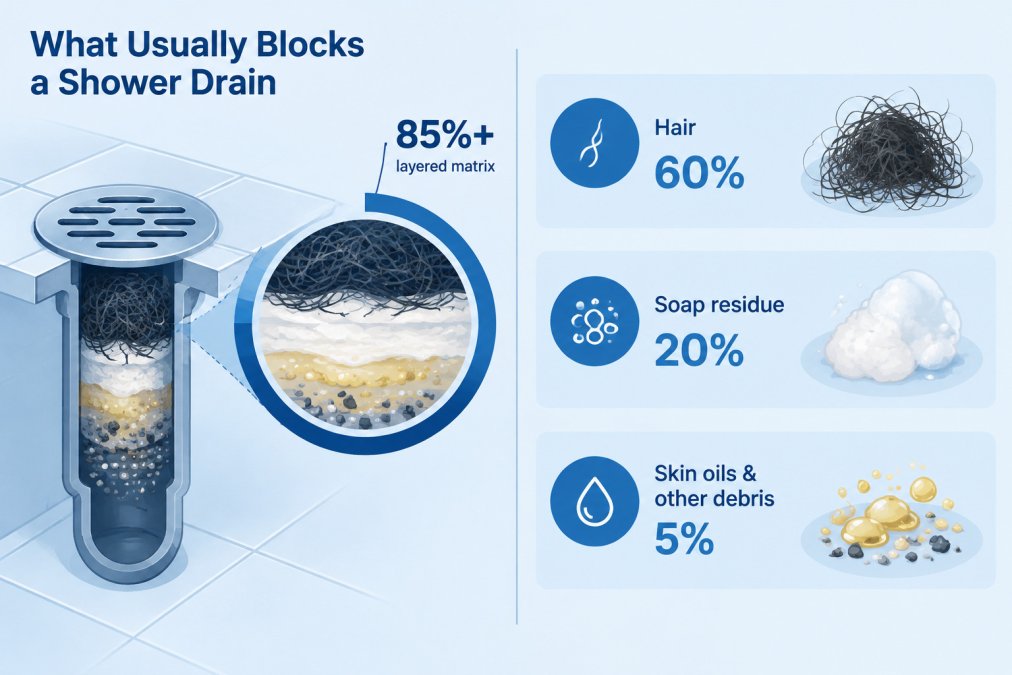
A blocked shower drain is rarely caused by one thing. Most blockages build up over months from a layered mix of hair, soap residue, skin oils and general debris. That is why a single pour of chemical cleaner often fails. The problem sits in the trap, not on the surface.
Hair is usually the anchor. Strands catch on the strainer and tangle with soap scum, so each shower adds a little more to the plug. Skin oils and body wash then coat the pipe walls and harden into a sticky film. Water flow slows, and the blockage grows.
Here is what typically builds up in a residential shower drain:
- Hair: the main binding agent that catches everything else
- Soap residue: sticky scum that hardens over time
- Skin oils and conditioner: coat the pipe walls and trap debris
- Mineral build-up: from hard water, which thickens the film
- General debris: grit, lint and small particles that stick to the layer
Clearing the top of the drain rarely fixes the root cause, because the build-up lower in the trap is still there.
(Image: chart showing the composition of residential shower drain blockages, with hair, soap residue, skin oils and debris, and the 85%+ layered-matrix finding highlighted | section:What Usually Blocks a Shower Drain)
Shower Drain Blocked with Hair: Removing It by Hand
If water is pooling around your feet, start by lifting the drain cover or strainer. Pull out the visible hair with gloves or a bent wire hook. Wrap a bent wire around the hair, pull it up, and check the strainer for more.
Next, clean the trap. Remove what you can reach, then run hot water to test flow. Manual removal costs very little. Many people also prefer this to harsh chemicals, which can damage pipes.
Watch out: never mix chemical drain openers with other cleaners or with a plunger you have just used. The fumes can be dangerous, and the chemicals can damage pipe joints.
Slow Draining Shower Causes and How to Tell Them Apart
A slow drain is not always a full blockage. Water that drains slowly but still drains is often a surface clog or a light build-up. Water that sits for minutes points to a deeper blockage in the trap or pipework.
Use this quick check to tell them apart:
| Symptom | Likely cause | First step |
|---|---|---|
| Slow drain, clears with hot water | Surface soap and oil film | Clean the strainer and flush with hot water |
| Slow drain, gurgling sounds | Air trapped by a partial blockage | Remove visible hair and check the trap |
| Water stands for minutes | Deep blockage or pipe fault | Stop DIY work and consider a professional |
| Bad smell with slow drain | Organic build-up or a failed trap seal | Clean the trap; if the smell persists, get it checked |
When to Call a Plumber for a Blocked Shower Drain
Call a professional if DIY clearing has failed, if water backs up into other fixtures, or if you smell sewage. Before booking anyone, you can read what to try first on a blocked shower drain. These signs can point to a problem further down the line, and a blockage left alone can cause damage.
A camera survey can show what is happening inside the pipe. At Drainamic, our CCTV surveys are MSCC5-coded.
If you need help, book a drain inspection. Our team can also show you how to unblock a kitchen sink drain at home if the same problem appears there. For a shower that keeps slowing, see the condition with a CCTV survey before paying for repeated call-outs.
Frequently Asked Questions
What causes a shower drain to become blocked?
Most shower blockages are a layered mix rather than a single item. Hair acts as the net that catches everything else, so soap scum and oils build up on it and gradually narrow the pipe. Mineral deposits from hard water can add to the problem over time. Removing the hair from the drain cover and the first section of pipe is usually the most effective first step.
Can you unblock a shower drain with bicarbonate of soda and vinegar?
Bicarbonate of soda followed by white vinegar can loosen light soap scum and help with minor odours, but it rarely clears a blockage made of compacted hair. A reaction of this kind also does little against the matted hair that causes most shower clogs. Chemical drain cleaners are often ineffective for the same reason, because hair needs physical removal rather than dissolving. If the water still drains slowly after a home remedy, remove the cover and check the trap by hand before trying anything else.
When should I call a plumber for a blocked shower drain?
Call a professional if the drain stays blocked after you have removed the cover, cleared the visible hair and tried a plunger or drain snake. Other signs include water backing up into other fixtures, gurgling from other drains, or a smell that persists after cleaning. These symptoms can point to a problem further down the pipework that a home fix will not reach. At Drainamic, we agree on the price before any work starts, so you know what is being done.
